How Quotes Fail Before the Price Is Even Sent
November 4, 2026
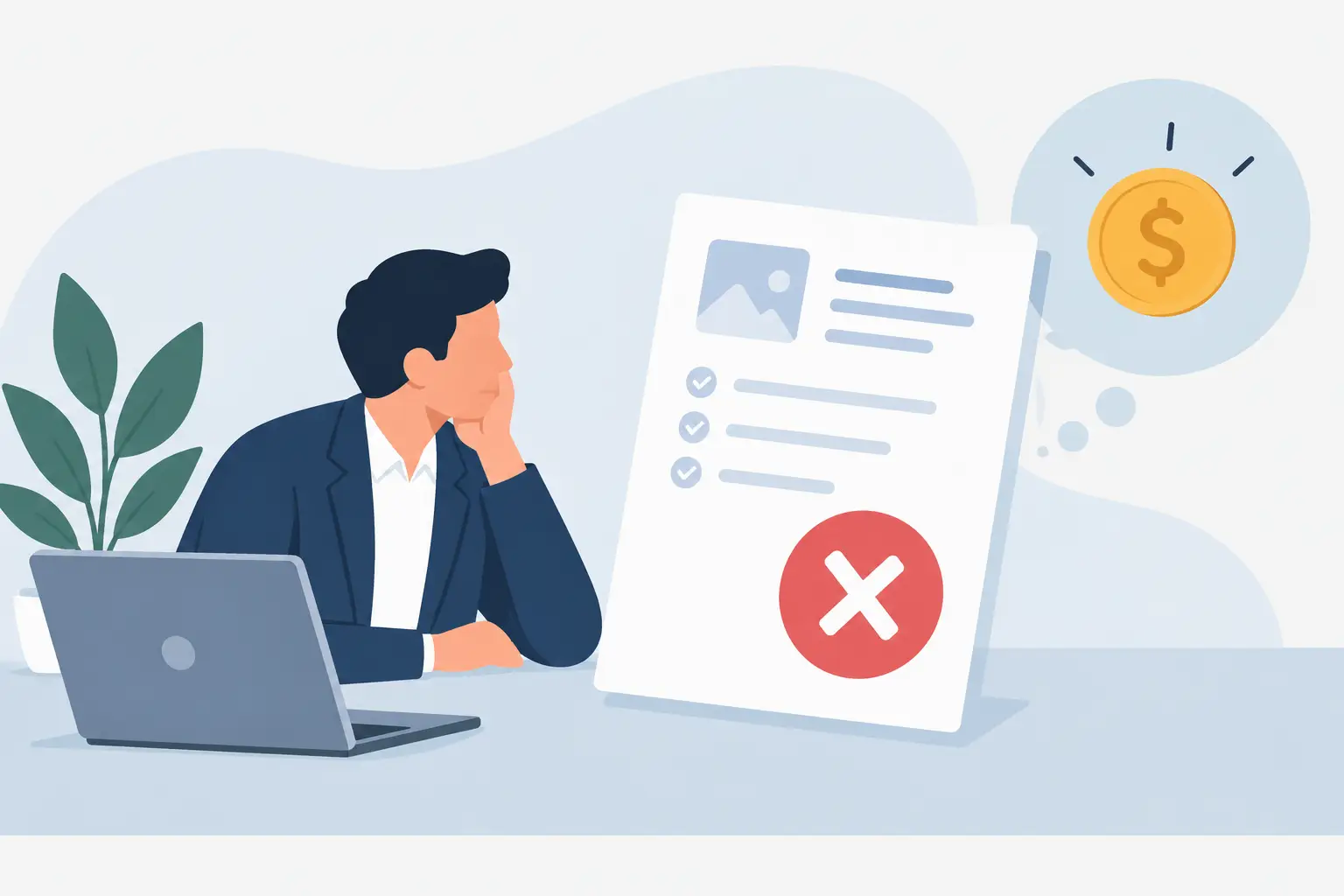
A buyer asks, “How much is it?” Your team sends the price. Then nothing.
You may assume the quote was too high. So you trim the number, add a discount, or make the next quote look more polished. But that often misses the real problem. How quotes fail usually starts before the quote is written. It starts when a buyer has no clear reason to choose you except price.
That is a hard place to sell from, especially when the work needs trust. A dental treatment plan, a kitchen renovation, a commercial fit-out, a home purchase, or a business service is not an impulse buy. The buyer is weighing risk. They want to know what happens if they choose wrong, whether the process will be difficult, and whether the promised result is real.
If your marketing says what every competitor says, your quote becomes a price list. And price lists are easy to compare.
The quote is carrying work your marketing did not do
Many established businesses have a familiar setup. An agency runs ads. Someone posts on social media. A freelancer updates the website. The sales team answers messages between other jobs.
Each piece may be reasonable on its own. Together, they can leave the buyer with a vague impression: “They seem professional.” That is not enough when the buyer is about to spend serious money.
Look at the message many buyers see before they ask for a quote:
“High-quality service. Experienced staff. Competitive prices.”
Your competitors can say the same thing. So can the business down the road with less experience, weaker service, and lower prices. Once every option sounds alike, the buyer does the only comparison left: “Which one costs less?”
Then the quote arrives with no context. It may be accurate, detailed, and carefully presented. But it is being judged as a number, not as the answer to the buyer’s real concern.
A quote cannot create trust on its own. It can confirm a decision that is already forming.
How quotes fail at the first “how much?” message
A buyer asking for price is not always ready for a quote. Often, they are trying to reduce uncertainty.
They may be thinking: “Can I afford this?” But they may also be asking, “Is this going to turn into a bigger project?” “Will I be pressured?” “Will this actually solve the problem?” or “Why does one provider charge twice as much as another?”
When the reply is just a number, the conversation stops at the cheapest possible comparison.
That does not mean your team should refuse to discuss price. Buyers deserve clear answers. It means the answer needs enough context to help them understand what they are comparing.
For example, a renovation company might receive this message: “How much for new windows?”
A weak reply is: “It depends on size and style. Send measurements.”
It is not wrong. It is simply easy to ignore. It gives the buyer another task and no reason to believe this company is different.
A stronger reply might say: “The right price depends on how much heat loss, outside noise, and draft you are trying to fix. We first check the openings and installation conditions, because a good window fitted badly still causes problems. If you send your zip code and a few photos, we can tell you what a visit would involve and give you a realistic range.”
The second reply does not hide the price. It shows the buyer why a quick number may not tell the whole story. It also makes the next step simple.
Example: Turning a generic quote into a buying decision
Here is an example for an aesthetic clinic. The details will differ for your business, but the principle holds.
Before the inquiry, the clinic advertises: “Expert injectables. Great prices. Book now.”
The buyer sees the same claims from ten other clinics. She asks for the price of a treatment. The receptionist sends, “Treatment starts at $X.” The buyer disappears or books the lowest-priced option.
Now change the message based on what buyers actually worry about. Public reviews and comments might show recurring fears: looking overdone, being talked into more treatment than they want, poor aftercare, or not knowing who will perform the procedure.
The clinic’s message could become: “Natural-looking treatment plans for people who want to look rested, not different. Your consultation is with the clinician who will explain what is suitable, what is not, and what recovery looks like before you decide.”
The initial response to “How much?” could say: “Most appointments fall within a range based on the areas treated and the result you want. Before we quote, the clinician checks what will look balanced for you, so you are not paying for more treatment than you need. Would you like the current range and the next consultation times?”
That is not clever wording for its own sake. It addresses the reason a buyer hesitates. The quote now follows a conversation about suitability, safety, and the result they want. Price still matters. It just no longer stands alone.
The hidden leaks after the quote is sent
Some quotes fail because the buyer never received a clear reason to care. Others fail because nobody owns what happens next.
A quote is sent on Friday. The team assumes the buyer will call if interested. On Tuesday, another business follows up first. Or the buyer has one unanswered question and decides that silence says something about the service they can expect.
This is not about chasing people until they are annoyed. It is about having a useful, agreed process. Who checks that the quote was received? What does the team say when they follow up? How do they handle “We are getting a few prices”? When does a manager step in?
If every staff member answers differently, the business sounds uncertain. If the owner is the only person who can explain the value properly, growth is limited by the owner’s calendar.
A good sales process gives the team plain language they can use. Not a script that makes them sound like robots. A clear way to ask what matters, explain the difference, and agree on the next step.
Better quotes begin with better evidence
You do not need to guess what buyers value. They say it in reviews, comments, calls, and emails.
Read the words buyers use when they praise a competitor. Read the complaints when they regret a purchase. Pay attention to the questions your staff answer repeatedly. Those patterns tell you what your message needs to address.
For a kitchen company, it may be fear of a renovation that drags on for months. For a real estate developer, it may be concern about handover dates and hidden costs. For a B2B service business, it may be frustration with providers who promise attention, then hand the work to someone junior.
Those are not minor details. They are often the real sale.
Your ads, website, inquiry replies, meetings, and quotes should all tell the same honest story. If the ad promises careful planning, the sales conversation should show how planning happens. If the quote includes a higher price, it should make the included work, reduced risk, and expected process easy to see.
This is where disconnected marketing causes damage. One person writes ads about quality. Another sends a quote with technical details. A third person answers inquiries with a price. The buyer has to connect the dots alone.
They usually do not.
Do not use the quote to rescue a weak offer
A redesigned quote can help. Clear sections, plain language, options where they are genuinely useful, and a simple next step all reduce friction. But design will not fix an offer that sounds identical to everyone else’s.
Nor should every business avoid price shopping. Some buyers will always choose the lowest number, and that may be fine. The goal is not to win every inquiry. It is to give the right buyers a reason to have the conversation your sale requires.
Start by looking at a recent lost quote. Do not only ask, “Was our price too high?” Ask what the buyer saw before they requested it, what they were worried about, what your team said, and what happened after it was sent.
If you want an outside view, StraightScale offers a free 45-minute business analysis. You will see what competitors are really advertising and where your sales process may be losing buyers before the quote ever gets a fair chance.